Trump’s Political Gambit: Agencies in a Crosshairs 🎯⚖️
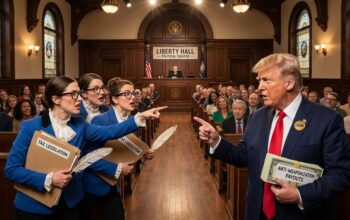
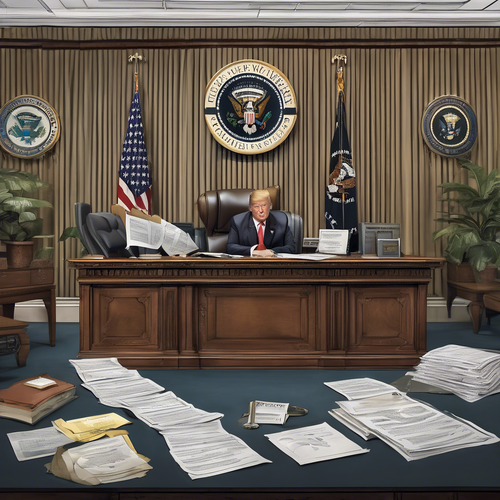
As the curtains rise on his latest political theater, Donald Trump targets federal agencies traditionally perceived as bastions of impartiality. The subtle irony lies in the fact that these very organizations, intended to operate above the petty squabbles that characterize the political arena, now find themselves entrenched in a partisan battle. Is it merely a tactical maneuver, or does this act pose significant risks to the fabric of governance? 🔍
At the heart of this latest saga is a striking antithesis: the expectation of neutrality versus the reality of politicization. Agencies like the FBI, EPA, and CDC — once seen as nonpartisan arbiters of governance — are being thrust into the political spotlight, their integrity called into question by soaring charges of bias and malpractice. Trump’s incessant accusations may serve short-term political gains, but at what cost to institutional trust? Here, the punchline of irony unfolds: in elevating accusations against agencies, is he too undermining the very power that once protected him?
Historic Precedents: A Lesson from the Past
History is littered with examples where the politicization of federal agencies backfired spectacularly. Consider the infamous case of the IRS during the Obama administration; accusations of bias against conservative groups led to a scandal that rocked the agency’s reputation and eroded public trust. The irony? Government is perilously reliant on trust. If agencies become mere pawns in a grand political chess game, can they hope to fulfill their obligations to the public? ♟️
Leaning into the present day, what makes this political maneuvering particularly precarious is the breeding ground it creates for disillusionment. As public trust erodes, citizens may view agencies not as protectors of their rights but as tools of the political elite. Ever more pronounced in the fractious political climate, this perception risks fracturing the very foundations of democracy.
The Stakes: Risks Involved
To grasp the ramifications, let us consider the stark contrast in narrative. On one hand, we have agencies that have absorbed monumental challenges, responding to crises from public health to environmental disasters — their work rooted in science and public service. On the other, we have a political strategy that thrives on division, painting these entities as villains in a drama that favors polarized agendas. 📉
- Undermining Credibility: Continuous attacks on agency credibility can weaken their effectiveness. How do you implement public health measures when half the population questions their validity?
- Public Compliance and Engagement: Agencies rely on public cooperation. Skepticism erodes the compliance necessary for programs to succeed, like vaccination drives or environmental protections.
- Long-Term Damage: The inherent risk is not just short-term political capital. Continuous assaults on these institutions could lead to long-lasting impacts on governance, hindering progress on essential issues.
Political Strategy: Diversification and Discourse
The strategy employed by Trump indicates a deeper political calculus at play. By targeting agencies traditionally insulated from political battles, he crafts a narrative that serves to galvanize his base while silencing dissent from those institutions. Here, we confront yet another paradox: in aiming to consolidate power, does he risk fragmenting the very coalition he seeks to bolster? It’s as if weaving a tapestry while carelessly unraveling threads that spell cohesion. 🧵
Moreover, the language employed is not merely a tactic; it serves as a clarion call for populist sentiment. By framing bureaucracies as elitist adversaries, he taps into a deep well of frustration felt by everyday citizens. However, this sentiment, when amplified, can herald disastrous consequences. The environmental policies of the EPA, long seen as protectors of public health, could become scapegoats for a political agenda that ultimately jeopardizes environmental safeguards.
Can Governance Survive the Political Storm?
Now we reach the crux of the matter: can governance truly withstand the storm? The evocative juxtaposition of public service contrasted against political manipulation raises profound questions. What does it mean for the expectant citizenry when the very agencies charged with safeguarding their interests become tangled in ideological quagmires?
Unchecked power without the necessary checks can lead to a governmental landscape reminiscent of a twisted funhouse mirror: distorted, chaotic, and disorienting. Are we leaning into a future where public servants are no longer just that but battle-hardened politicians? 🔮
In contemplating these developments, we must reflect on the paradox of our time: the more intensely we politicize governance, the greater the risk we pose to our democratic commitments. Should agencies that have historically served as pillars of stability become the battlegrounds for partisan conflicts, we teeter on the precipice of a governance crisis.
In summation, Trump’s targeting of these once-sacrosanct institutions may energize his base, but it harbors implications that extend well beyond the immediate horizon. A government mired in political contests invites an environment where functionality gives way to chaos, leaving us to ponder: can we afford to politicize the very engines of our democracy? 🤔