
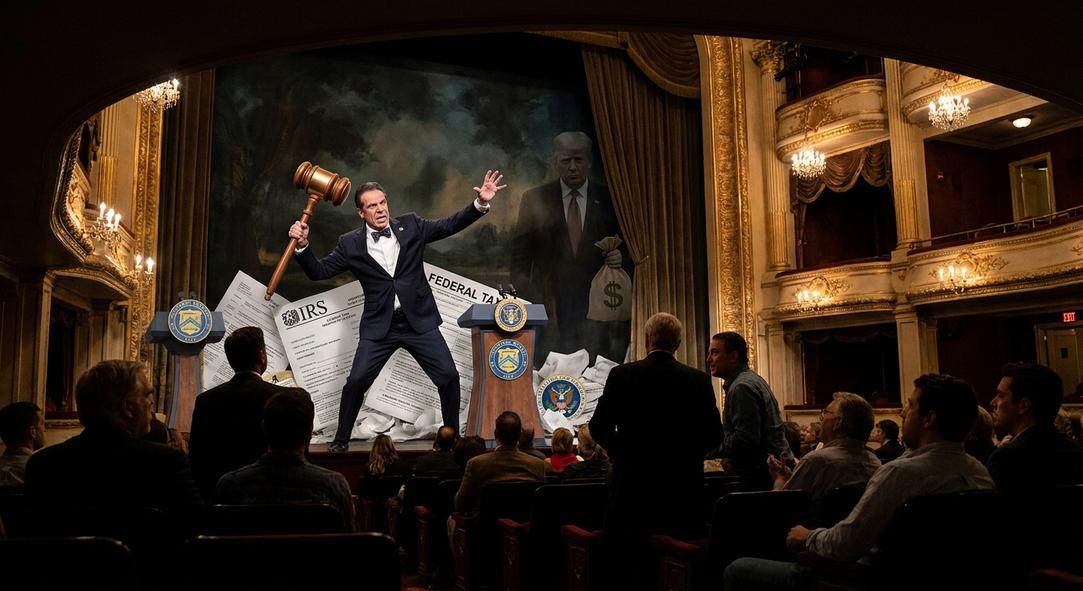
Blue States Pitch 100 Percent Tax on Trump’s ‘Anti-weaponization’ Payouts 💰🛡️
What do you get when former President Trump pursues financial retribution cloaked as “anti-weaponization” payouts? A vivid display of state-level brinkmanship, that’s what. As blue states mobilize to impose a 100% tax on these anticipated windfalls, we find ourselves face-to-face with a grand theatrical irony – where the very states labeled as antagonists in Trump’s narrative now assume the role of fiscal scapegoaters. But isn’t it all just historical déjà vu dressed in today’s political attire? What does this tell us about state power and federal influence? 🏛️
The Antitheoretical Theater of Taxation
At first glance, the proposal from Democratic-held states appears almost quixotic – tilting at financial windmills in a bid to curb Trump’s monetary ambitions. This attempt to harness state taxation clout unfolds like a Shakespearean comedy, where Trump’s payouts become fodder for laughs, not unlike trying to sew a button on a shadow. Is it merely a strategic ploy to wield state authority over federal machinations, or does it reveal a deeper tussle between divergent political ideologies? The scenes are set, and the players are ready.
Paradoxical Sovereignty: States vs. Federation
As blue states attempt to paint Trump’s financial ventures in hues of their own making, they inadvertently highlight the old antithesis of states’ rights versus federal hegemony. Here lies a paradox as age-old as the republic itself: the sovereignty of states embracing national oversight. In taxing Trump’s fund, have these states become both the caretakers of democratic values and caretakers of their unique lexicon of justice?
The stakes aren’t merely financial but tap into the heart of federalism and its practicalities. How long can the dance of sovereignty last when political lines are drawn with tax codes instead of ink? Historically, state taxes were roads to public good, fields where federalism seeded growth. Now they morph into film noir theatres of political strategies, a storm in the teacup of governance.
Examining the Aftermath: What’s Really at Risk?
But beneath the satirical façade lies a labyrinth of genuine concern. The friction between taxation policy and political motives could eclipse sensible governance. Blue states’ strategy to weaponize the very payouts earmarked as anti-weaponization is reminiscent of Sisyphean labor; eternally taxing, intrinsically cyclical. Are these states navigating unchartered waters, or have they merely charted an expanse of ocean in a teacup? 🌊☕
With every twist and turn, this unfolding drama underscores a sobering reminder: even amidst political farce, the gravity of financial legislation echoes the looming shadows of unintended consequences. Is this a strategic jest masterminded to outflank a transaction? Or an emblematic waltz around the battleground of abstract ideas and tangible leadership?