
San Francisco Politician Recalled Over the Great Highway’s Closure 🛣️🔄
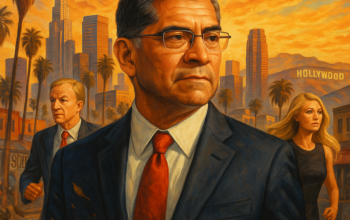
In the sun-soaked streets of San Francisco, where the breeze carries the scent of the ocean, local politics has taken on a surprisingly tempestuous turn. A politician, once celebrated for their promises of community engagement and sustainable development, has found themselves abruptly ousted from office. The culprit? The controversial closure of the Great Highway—a decision that has ignited fierce debate and ultimately resulted in a recall election. But how did a closure intended to promote environmental policies lead to such political upheaval? 🌊⚖️
Closure: A Good Intent Gone Awry?
In an ironic twist of political fate, the closure of the Great Highway, aimed at fostering a pedestrian-friendly environment and reducing carbon emissions, quickly morphed into a public relations nightmare. Here lies the startling antithesis: an initiative to improve urban life instead produced an uproar reminiscent of a Shakespearean tragedy. Stories of frustrated commuters circling their neighborhoods like lost souls have become an all-too-familiar refrain, while cyclists and pedestrians found themselves grappling with disorganized detours and overrun alternative routes. 🚴♂️🏄♀️
Opponents of the closure point out that the very essence of the highway—its picturesque views and accessibility—has been lost. The irony, in a setting where green policies are often lauded, lies in the very fact that residents, whose daily lives become obstacles in eco-friendly ambitions, feel ensnared in a decision that leaves them driving in circles rather than coastal bliss. 🌳💔
The Case for Recalling a Politician
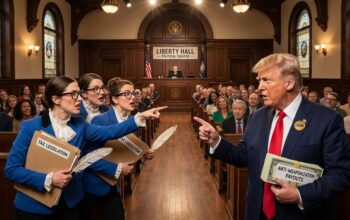
The ensuing backlash was nothing short of explosive. Petitions circulated faster than the waves crashing on Ocean Beach, collecting signatures that would ultimately instigate a recall motion against the sitting city supervisor. The public sentiment shifted as voices echoed in town halls, demanding accountability—a notion that appeared to evaporate in the salt air once the highway closure took effect. Many constituents felt their opinions had been drowned out by the tidal wave of progressive policy-making. Was this resurrection of youthful activism a serendipitous consequence of the pandemic? ⚡✍️
Yet, in this dense fog of political turbulence, one must wonder: was this recall merely a manifestation of disenchantment, or the panic of a populace realizing its voice can still ripple through the political landscape? As the voter base swelled with calls for change, the implications of this recall extend beyond individual culpability and into the realm of larger questions: Who truly holds power in urban governance—the activists advocating for green initiatives or the constituents wanting the liberty of movement? 🤔⚡
The Great Highway: A Symbol of Divergent Values
The Great Highway stands not only as a physical structure but as a battleground for contrasting ideologies. On one side, environmentalists championed the closure as a foothold in the fight against climate change, imagining a future where urban landscapes intertwine with nature, replete with clean air and safe spaces. On the other, commuters, who daily navigate the intricate web of city life, express their animosity towards what they perceive as calculated neglect of their basic needs—a struggle marked by an evocative simile: navigating the post-closure streets was akin to walking a tightrope with fear and frustration swirling beneath. 🌐🤯
Quote: “We need to find a balance between environmental goals and the daily lives of our citizens. The closure fails to consider the ripple effect on our community.” – Local Resident
Aftermath: Political Lesson or Miscalculation?
In the aftermath, San Francisco’s political stage finds itself caught in a whirlwind. The recall effort—successful, resolute—may serve as a sobering lesson. As constituents rally for change, they do so not only for immediate results but as guardians of their democratic rights, echoing their voices in the hallowed halls of city government. Should the narrative become a lengthy tale of political miscalculation, one can only hope future leaders take heed: in urban governance, the hearts and minds of the people remain the essential currency. 🗳️❤️
The continuing saga of the Great Highway encapsulates the quintessential struggle faced in many metropolitan areas today—a longing for progress unchecked by the speed of communal sentiment. Whether this working-class rebellion ushers in a revamped political agenda or merely serves as a cautionary tale, the consequences of this closure echo like a bell tolling in the distance, heralding a shift in the city’s political landscape. As the tides of change ebb and flow, one fact remains clear: the road ahead is paved not just with asphalt, but also with the values and aspirations of its people. 🌅🛣️