A Lengthy Legal Battle in North Carolina Could Show How to Flip an Election
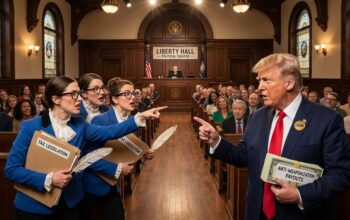
RALEIGH, N.C. – In the quiet corridors of North Carolina’s judicial system, a protracted legal fight over a razor-thin state legislative race is drawing national attention, not just for its duration, but for the playbook it might offer those seeking to challenge election outcomes. The battle, unfolding over months through recounts, administrative hearings, and court appeals, highlights the intricate, often ambiguous, pathways available to contest results, raising questions about election integrity, the burden of proof, and the very finality of the vote. 🗳️
While specific names and districts often fade from memory, the mechanisms employed in such North Carolina disputes serve as a microcosm of broader national trends. Following the heightened scrutiny of election processes in recent years, legal challenges—once relatively rare occurrences reserved for minuscule margins or clear evidence of widespread error—have become an increasingly anticipated feature of the post-election landscape. This specific, drawn-out contest offers a granular look at how state election laws are stress-tested and potentially weaponized.
The Anatomy of a Contested Race
The dispute began, as many do, with an exceptionally close margin—fewer than a hundred votes separating the candidates in initial counts for a pivotal seat. This immediately triggered statutory recount provisions under North Carolina General Statutes. However, the challenge quickly escalated beyond simple ballot counting. Allegations surfaced regarding the handling and validity of a batch of absentee-by-mail ballots, a voting method whose usage surged during the pandemic and remains a focal point for election security debates.
Key points of contention often involve:
- Signature Verification: Challenges questioning whether signatures on absentee ballot envelopes sufficiently matched voter registration records. North Carolina law provides standards, but their application can be subjective and lead to litigation.
- Witness Requirements: Disputes over whether absentee ballots fully complied with the state’s witness requirements, which have themselves been subject to legislative changes and legal challenges.
- Voter Assistance Allegations: Claims of improper or illegal assistance rendered to voters, particularly those in vulnerable populations, blurring the line between permissible help and undue influence or ballot tampering.
- Chain of Custody: Questions raised about the secure handling and transport of ballots, probing for potential procedural errors by election officials.
What distinguishes lengthy battles like the one inspiring this analysis is the progression from county-level boards of elections, through potential review by the North Carolina State Board of Elections (NCSBE), and ultimately into the state court system. 🏛️ Each stage involves different standards of review and evidence presentation, prolonging the uncertainty.
Relevant Data Point: Close elections are not uncommon in North Carolina. Several state legislative and even congressional races have been decided by fractions of a percentage point in recent cycles, making the state fertile ground for testing the limits of election contest procedures. The resources required for such extensive legal challenges, however, often mean they are pursued primarily in high-stakes races with significant outside funding.
Navigating North Carolina’s Election Law Maze
North Carolina’s election laws provide specific avenues for contesting results, governed by Chapter 163 of the General Statutes. An “election protest” can be filed alleging errors or irregularities. To potentially overturn an election outcome, the protest must typically demonstrate that the alleged irregularities cast doubt upon the outcome of the election itself—a high bar requiring substantial evidence affecting a number of votes greater than the margin of victory.
The process involves several potential steps:
- County Board Review: Initial protests are usually heard by the county board of elections where the alleged irregularities occurred. They conduct preliminary investigations and hearings.
- State Board of Elections (NCSBE) Appeal: Decisions by county boards can often be appealed to the NCSBE, a bipartisan body responsible for statewide election administration and oversight. The NCSBE can conduct its own hearings and investigations.
- Judicial Review: Final orders from the NCSBE can typically be appealed to the North Carolina Superior Court, and potentially further to the state appellate courts or Supreme Court. ⚖️ This judicial phase can significantly extend the timeline as legal arguments are briefed and deliberated.
Crucially, the standard of proof required to actually *invalidate* ballots or *overturn* a certified result is demanding. Mere procedural hiccups are usually insufficient; challengers must often show malfeasance, systemic error, or illegal votes cast on a scale large enough to have plausibly changed the outcome. This distinction is central to understanding why most election challenges, even lengthy ones, do not ultimately result in a “flipped” result.
A Potential Blueprint or a Cautionary Tale?
Does a prolonged North Carolina legal fight truly offer a “how-to” guide for flipping an election? Perhaps not in the sense of a guaranteed strategy, but it undeniably illuminates the process and tactics involved in aggressively challenging results. It demonstrates how ambiguities in election law, combined with procedural scrutiny and persistent litigation, can be leveraged to cast doubt and extend uncertainty, even if the final certified winner remains unchanged.
Campaigns and legal teams nationwide observe these cases closely, learning which arguments gain traction, what evidence is required by administrative bodies and courts, and how far procedural challenges can be pushed. The focus often shifts from proving massive fraud (which remains exceedingly rare) to accumulating enough procedural errors or questions about smaller batches of ballots to argue that the true outcome cannot be definitively known or that the margin of victory has been erased. 📊
However, such battles also serve as a cautionary tale. They are immensely costly, divert resources from governance, can deepen partisan divides, and risk eroding public confidence in the electoral process itself. Election officials face increased pressure and scrutiny, and the judiciary is drawn further into politically charged disputes. The line between legitimate oversight and leveraging the legal system to undermine democratic outcomes is a fine one.
The Enduring Tension
The intense legal maneuvering seen in close North Carolina contests underscores an enduring tension in American elections: balancing access to the ballot box with security measures, and ensuring that every valid vote counts while providing clear mechanisms for addressing legitimate errors or misconduct. As legal challenges become more common and sophisticated, state legislatures and courts continually grapple with where to draw these lines.
Ultimately, while lengthy court battles might expose vulnerabilities or ambiguities in election administration, successfully overturning a certified election result remains a steep climb, requiring concrete evidence of substantial problems. The North Carolina experience, rather than offering a simple recipe for flipping results, may instead highlight the resilience of the established processes, while simultaneously signaling a future where the fight over election outcomes increasingly extends from the ballot box to the courtroom. The question for voters and policymakers alike is how to navigate this terrain without undermining faith in the cornerstone of democracy. 🤔