New Jersey Governor Blames Out-of-State Agitators: Who Really Fuels Protest Flames? 🔥🌍
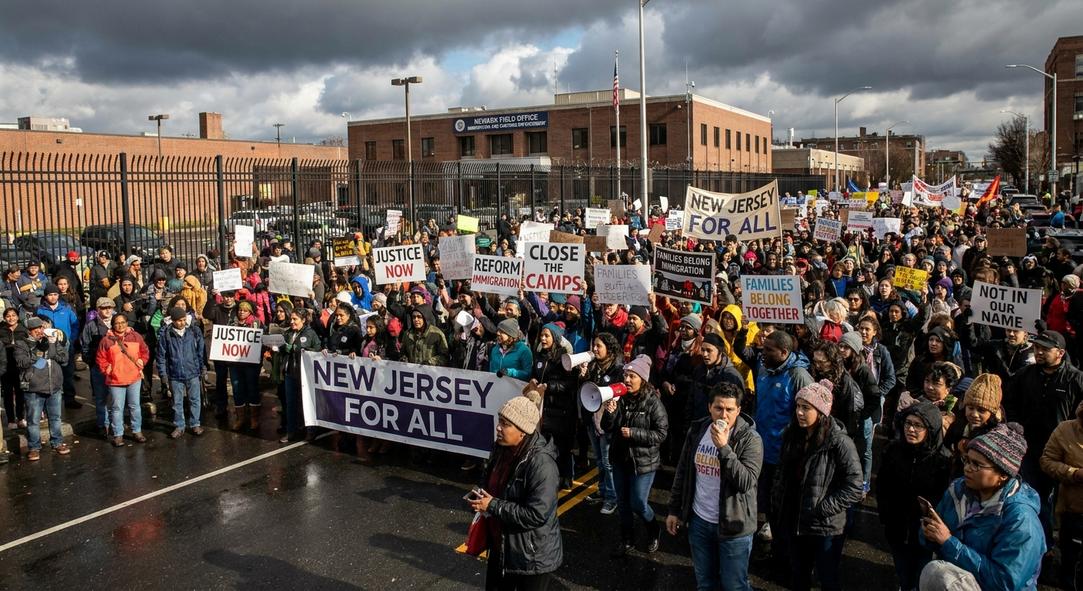
New Jersey’s tranquil bureaucratic waters have been stirred, not unlike a robust espresso swirled into what was once a placid cup. Governor Phil Murphy faces the protest storm at the notorious Newark ICE detention center ⛓️, claiming external agitators are the ones adding fuel to the fire. Yet, one might ponder, in a world as interconnected as tangled earbuds, why should anyone be surprised when state lines blur in matters of justice?
As the governor points his fingers outward, citing out-of-state forces inflating tensions and transforming peaceful protests into roiling displays of dissent, one wonders whether this explanation serves as a convenient deflection, a diplomatic sleight of hand masking deeper issues within the very heart of New Jersey’s policy machinery 🛠️. After all, is it not simpler to blame the rain for flooding rather than the lack of drainage?
The Intertwined Saga of Local and External Advocates
Local activists and organizations argue that the protests arise from a complex web of homegrown discontent, not unlike the invasive roots of a stubborn dandelion pushing through concrete. They contend that the harsh realities of detainment draw individuals from all corners of the map, united in a singular cause that transcends mere geography 🗺️. Agitators or allies, the lines blur when the cries for reform reverberate beyond asphalt borders.
New Jersey’s protest stage is illuminated by the torch of social justice 🕯️, igniting debates on immigration policy and humane treatment. The juxtaposition between local governance’s urge for control and the sprawling call for reform can feel as stark and disorienting as stepping from a shadowy alley into the glaring midday sun.
Echoes of History: A Tapestry of Protest
Reflecting on the broader historical context, this isn’t the first chapter where local issues have drawn wide-eyed spectators—or participants—from afar. The Civil Rights Movement of the 1960s witnessed similar patterns, where out-of-state activists bolstered monumental shifts, like a river swelling from tributaries near and distant 🌊. Is history repeating or simply dressing in different attire?
Comparing the protests with natural forces offers clarity: they are akin to thunderstorms gathering strength from atmospheric pressure converging from various locales, unpredictable yet inevitable in their occurrence. Thus, questioning the authenticity of the protests becomes an echo against the thunderous roars demanding change, asking, “Is the storm foreign, or did it forge itself in the winds of our own creation?”
A Commentary on Accountability and Action
Amid this tumult, Governor Murphy’s remarks serve not as a solution, but as a commentary on the persistent chasm between leadership’s reflections and the people’s aspirations. Perhaps the lens should shift inward—into empathizing with the human stories entwined within these protests, where real lives feel the palpable pressure of policy 🏡.
Ultimately, the discourse begs the timeless rhetorical query: Can one truly separate the song from the choir, the distant echo from the originating shout? As conversations continue to whirl, like autumn leaves caught in a blustery dance, one truth remains unshaken: when voices rise in unison, whether local or distant, they hammer the anvils of change—persistently and resoundingly. 🔨