
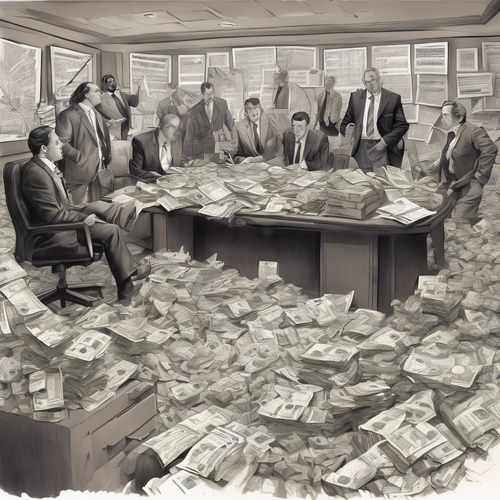
Saks at a Crossroads: Unnerving Times Amid Credit and Vendor Unrest 🛍️🔍
As the glittering façade of Saks Fifth Avenue begins to show signs of tarnish, one cannot help but ponder: is this the end of an era or merely a rocky chapter in the illustrious saga of this retail titan? In a marketplace where consumers thirst for luxury and brands must tread lightly upon the tightrope of financial viability and consumer sentiment, Saks finds itself grappling with creditor unease and vendor trepidation, rather like a once-mighty ship caught in an unforeseen storm.
The Landscape of Luxury Retail
Luxury retail has always been akin to the cyclical dance of ballet—elegant yet fraught with tension. Oversupply meets waning demand, while an ever-evolving consumer base seeks new experiences over mere acquisitions. In recent times, Saks has battled revelations over its debt burden and wavering supplier support, producing a scenario rich with dramatic irony. After all, one might think that a brand synonymous with opulence would glide above financial strife like a swan on a placid lake, yet here it is, flapping furiously to stay afloat.
Illustrating this stark dichotomy is Saks’s recent push to reinvent itself as a digital-forward retailer amidst a backdrop of growing financial uncertainty. On one hand, the company is doubling down on its e-commerce strategy—rightly so, given that online shopping surged during the pandemic. On the other, traditional vendors are starting to express concerns akin to a cautious parent observing their child navigating a treacherous path: the fear is palpable, and the outcome uncertain.
Creditors and Vendors: The Reluctant Allies
The chorus of unease from creditors and vendors alike paints a vivid picture. For creditors, the risk is almost tangible. According to reports, Saks has experienced fluctuating sales performance, causing tensions to bubble to the surface. It’s as if the company, once viewed as a beacon of stability, now resembles a flickering candle, struggling in a gusty wind.
- Saks reported a 9% decline in same-store sales last quarter.
- Vendors have reported delays and uncertainties regarding payables.
- Analysts suggest a debt restructuring may be essential to regain vendor trust.
For vendors, the unease stems from a very human instinct: the fear of non-payment. As the adage goes, trust takes years to build and mere seconds to shatter. As Saks navigates these precarious waters, it faces the Herculean task of resurrecting its relationships with vendors, who are eyeing the company’s financial health with a critical, if not skeptical, gaze. Will they continue to stock their glamorous goods or shy away from a partnership seen as risky?
Cycles of Innovation Amid Uncertainty
Amidst the cacophony of concern, however, lies a glimmer of hope. Ingenuity often blossoms from adversity; in this case, Saks has taken steps toward revitalizing its brand, evolving not just in its product offerings but also in its communication strategies. They’ve embraced social media influencers, shifting the age-old paradigm of advertising from polished print ads in glossy magazines to spontaneous, relatable posts on Instagram and TikTok—an antithesis to their previous marketing methods.
Yet, one must ask: can these modern strategies mend the rifts created by financial distress? Or are these attempts akin to throwing a bouquet of flowers into a storm? Saks’s brand reputation dances on this precarious edge, balancing between innovation and tradition, while the question lingers—how long can a gilded image stand in the shadows of fiscal woes?
The Path Forward
If history teaches us anything, it’s that adaptability is vital for survival. As the luxury sector shifts, Saks must innovate yet not relinquish its heritage—a delicate balance akin to walking a tightrope strung between nostalgia and progress. Can Saks emerge from this turbulent period stronger, like a phoenix rising from the ashes, or will it crumble under the weight of its own ambitions and external pressures?
Over the coming months, all eyes will remain fixated on Saks. Their journey through creditor and vendor unrest not only serves as a cautionary tale for retailers everywhere but invites reflection on the very nature of resilience in business. In a world changing faster than the seasons—or perhaps, like the tides—one must wonder what other giants may one day find themselves at a similar crossroads.